
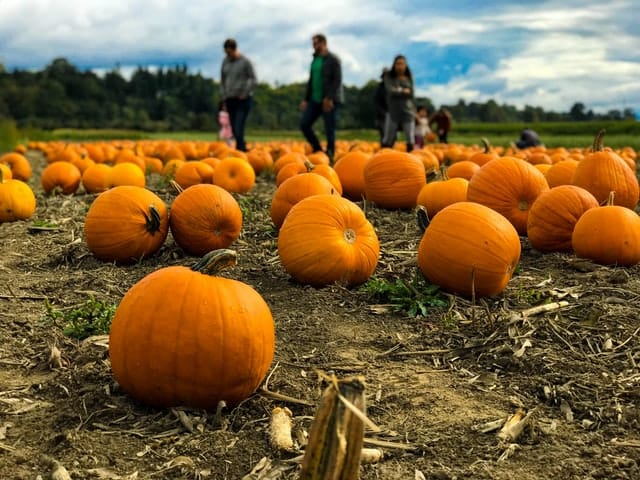
Wandering through rows of orange pumpkins on a crisp autumn day is one of the simple pleasures of the season. Whether you are visiting a farm patch, a market or a pumpkin festival, the choice can be surprisingly hard once you are standing in a field full of them. A few quick checks will help you bring home a pumpkin that looks good, lasts well and suits what you have in mind for it.
Decide what your pumpkin is for
Before you start picking, think about how you plan to use it. Large carving pumpkins have thinner walls and a big hollow centre, which makes them easy to scoop out and cut into a jack-o'-lantern. They are edible, but the flesh tends to be watery and fairly bland. If you want to cook, look for smaller culinary pumpkins with thick, dense flesh, often labelled as sugar or pie pumpkins. They are heavier for their size and much better in soups, curries and bakes.
If you are not sure which type you are looking at, ask the grower or staff. Most are happy to point you towards the best options for carving or for the kitchen.
Check the stem, skin and weight
The stem tells you a lot. A healthy pumpkin has a firm, dry stem that is green or woody brown and still well attached. Avoid any with a soft, black or missing stem, as these tend to rot sooner. Even when the stem looks strong, carry the pumpkin from underneath rather than by the stem, which can snap and leave an open wound.
Next, look over the skin and turn the pumpkin to check the base. You want an even colour with no soft spots, mould, deep cuts or wet patches. Small surface scratches are usually harmless, but anything that dents when pressed is a warning sign. Give it a gentle knock: a ripe pumpkin often sounds hollow. Finally, lift it. A pumpkin that feels heavy for its size is usually fresh and well developed.
Think about shape and stability
For carving, a pumpkin with a flat bottom that sits upright without rocking makes the job much easier and safer. Look at the shape and imagine your design: tall, narrow pumpkins suit long faces, while round, wide ones leave room for big grins or patterns. Pale, white or warty varieties can add interest to a display even if you do not carve them at all.
Tips for a day at a patch or festival
Fields can be muddy in autumn, so wellies or sturdy boots are a good idea, along with clothes you do not mind getting dirty. Bring a strong bag, a box or a blanket for the car boot so pumpkins do not roll around on the way home. Going earlier in the day or earlier in the season usually means more choice, while later visits can be quieter. Check the venue's own website or social media for practical details such as opening times, parking and payment options before you set off.
If you are visiting with children, let them choose a smaller pumpkin they can carry themselves. It keeps them involved and saves your back for the big one.
Keep it fresh once you get home
An uncarved pumpkin can last for weeks if it is kept somewhere cool, dry and out of direct sunlight. Wipe off any mud and let it dry fully before bringing it indoors. Once carved, a pumpkin breaks down much faster, so it is best to wait until a few days before Halloween before picking up the knife.
When you do carve, keep the seeds and the flesh. The seeds roast into a tasty snack and the flesh can go into soup or bread. Our cooking with pumpkins page has ideas, and you can read about pumpkin nutrition to see why it is worth eating as well as admiring.
With a little care at the patch and a little patience at home, your chosen pumpkin will brighten your doorstep through the season and give you something good to eat at the end of it.